Frequently Asked Questions
Practical guidance for a respectful, comfortable first visit to Fushimi Inari Taisha and Japan.
No admission ticket is required to enter the main shrine grounds or walk the torii trails. The grounds are generally accessible 24 hours a day, year-round. Shrine offices, amulet counters, shops and restaurants keep their own daytime hours, and access can occasionally change for ceremonies, maintenance or severe weather. Check official notices if you need a particular service.
Early morning is usually calmer and cooler; late afternoon can also be pleasant, but the mountain trails become dark after sunset. Allow about 45–90 minutes for the lower shrine and Senbon Torii, or roughly 2–3 hours for the full mountain circuit, depending on your pace, stops and crowd levels. Festival days and Japanese holidays can be much busier.
The train is usually the simplest option. From Kyoto Station, take the JR Nara Line to Inari Station, directly beside the main approach. The Keihan Line’s Fushimi-Inari Station is another convenient option, about a five-minute walk away. Use an IC transit card or buy the appropriate rail ticket, and confirm that your chosen train stops at your station.
A simple respectful visit is enough; visitors are not expected to perform everything perfectly. If you wish to follow the customary form, bow once before passing through a torii, keep to the side of the approach, and purify your hands at the temizuya when it is available. At the worship hall, make an optional offering, bow twice, clap twice, pray quietly, then bow once. Follow posted instructions, as practices can vary.
Treat the precinct as an active place of worship. Keep voices low, do not enter restricted areas, touch or damage buildings and torii, smoke, light fires, fly drones, feed wildlife or leave rubbish. Eating and drinking are limited to marked rest areas. Do not block narrow paths for photos, and keep costumes or behavior appropriate to a sacred site.
Personal photography is generally possible in permitted outdoor areas, but always obey no-photography signs. Commercial photography and filming in prohibited areas require permission. Never stop worshippers from passing through narrow torii paths, avoid intrusive equipment, and ask before photographing identifiable people or ceremonies.
The lower precinct is the easiest area to visit, but the full Mount Inari circuit includes many steps, steep inclines and uneven surfaces and is not fully step-free. Wear supportive walking shoes and weather-appropriate layers, carry water, and turn back whenever needed. Visitors with mobility needs should focus on the lower grounds and ask shrine staff about current access conditions.
Eat and drink only in marked rest areas rather than while walking, and take all rubbish with you unless a suitable bin is provided. Do not leave strollers unattended outside designated places. Large luggage is difficult on crowded trains and mountain paths, so use a station locker or luggage service before visiting whenever possible.
Yes, carrying some Japanese yen is useful. Shrine entry is free and offerings are optional, but coins are convenient for offerings, amulets, vending machines and smaller nearby businesses. Cards and IC transit cards are widely useful in Japan but are not accepted everywhere. Check the displayed payment methods and keep a modest amount of cash as backup.
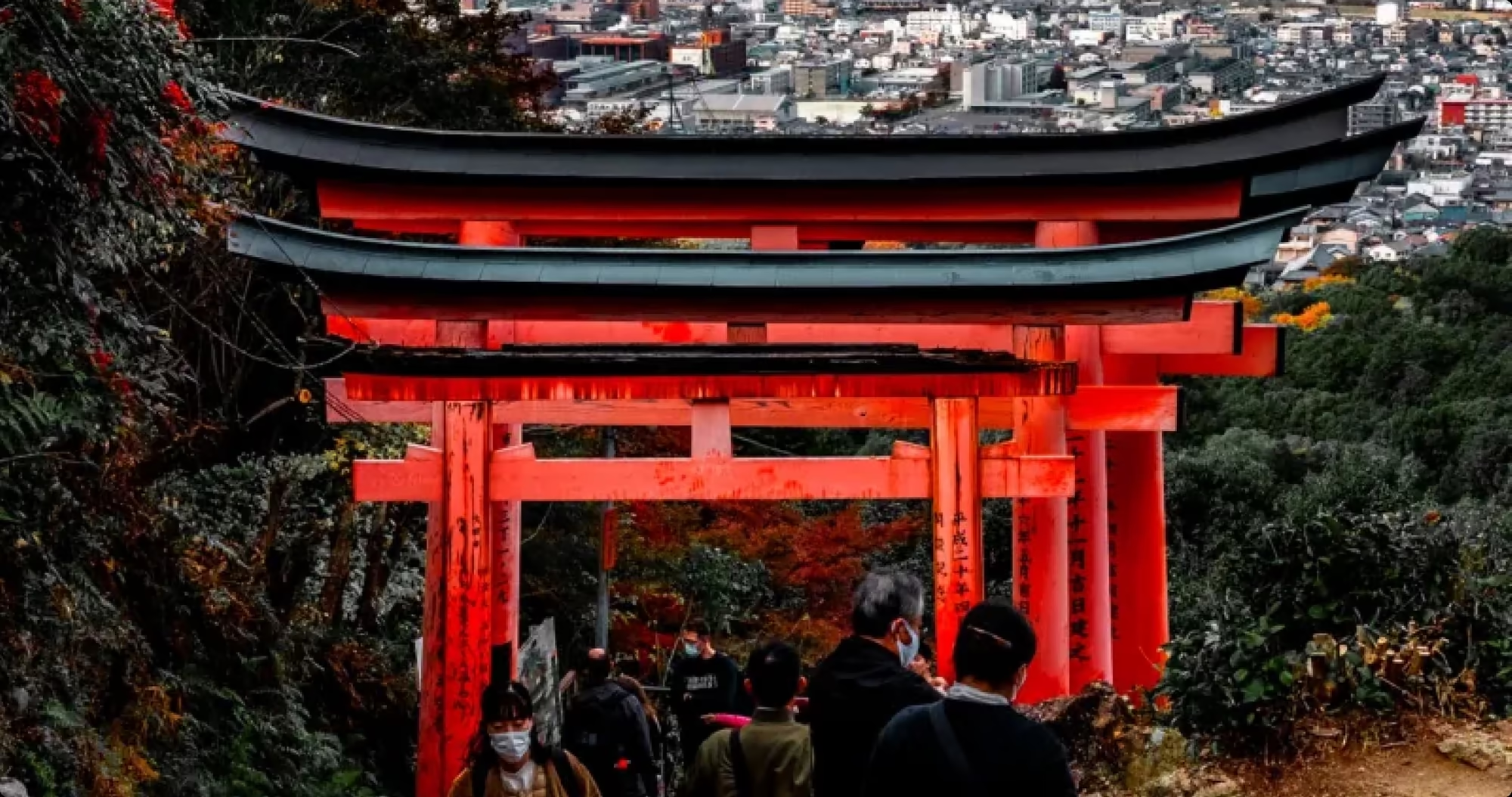
Foxes are regarded as unseen messengers of Inari Okami; they are not the deity itself. The torii gates were donated by worshippers and businesses as expressions of gratitude or prayers for wishes to be fulfilled. Fushimi Inari’s mountain paths contain around 10,000 torii of many sizes, creating the famous vermilion corridors.